
The Most Common MOT Failures in the UK and How to Avoid Them
Every year, millions of drivers across the UK sit nervously waiting to find out whether their car has passed its MOT. For many, it’s one of those annual tasks that creeps up faster than expected, and the anxiety of not knowing what’s lurking under the bonnet is something most motorists can relate to. The good news is that a significant proportion of MOT failures are entirely preventable. In fact, according to data from the RAC Foundation, over 2.5 million MOT failures in recent years were linked to basic checks that drivers could have carried out themselves before the test. That’s a lot of wasted time, money, and stress.
At Nork Motor Engineering, we’ve been carrying out MOT tests in Banstead and the surrounding Surrey area for over 40 years. In that time, we’ve seen the same issues come through our doors again and again. So rather than keep that knowledge to ourselves, we thought it was worth writing it all down. Here’s an honest, practical guide to the most common MOT failures, backed by current DVSA data, and what you can do about each one before your test day arrives.
Lights and Electrical Equipment — the Single Biggest Cause of MOT Failure
If there’s one area that catches more drivers out than any other, it’s lighting. According to the latest DVSA data for 2024 to 2025, faults with lamps, reflectors, and electrical equipment account for over 23% of all MOT defects recorded. That makes it the most common failure category by some margin, and yet it’s also one of the easiest to check yourself.
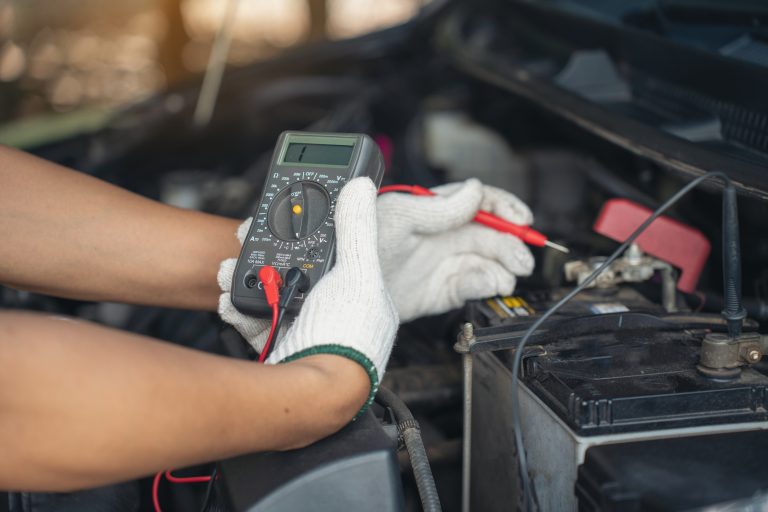
A faulty headlight, a blown brake light, a dead indicator, or even a dim number plate light can all result in a failure. The frustrating thing is that most of these take minutes to fix and cost very little. Before your MOT, walk around your car with the engine running and check every single light. Ask someone to stand behind the car while you press the brakes to confirm the brake lights are working. Check both indicators, the hazard lights, the reversing light, and the number plate lights. If anything looks dim or isn’t working, get it sorted before you book in.
Brakes — the Second Most Recorded Failure Category
Brakes account for just over 21% of all MOT defects, according to the same DVSA data, making them the second-largest failure category. More concerningly, brakes also have the highest proportion of dangerous defects of any category, which means these aren’t just advisory issues. A brake failure can result in your car being deemed unroadworthy on the spot.
The most commonly recorded brake faults include inefficient braking performance, worn brake pads and discs, and the parking brake failing to meet the required efficiency standard. The parking brake, in particular, is one of the most frequently cited individual faults across all makes and models, so if your handbrake feels loose, doesn’t hold properly on a hill, or the lever travel feels excessive, it’s worth having it looked at before your test.

What Can You Do at Home?
You can’t fully assess your brakes yourself, but there are warning signs worth knowing. If you notice your car pulling to one side under braking, if the brake pedal feels spongy or lower than usual, if you can hear grinding or squealing when you brake, or if your car takes noticeably longer to stop than it used to, those are all signals that something needs attention. Don’t leave them until MOT day.
Tyres — Small Details With Big Consequences
Tyre faults consistently appear in the top failure categories, and the most common issue is straightforward: tread depth below the legal minimum of 1.6mm. This applies across the full central three-quarters of the tyre’s width and around the entire circumference. It might sound like an obscure measurement, but most garages and tyre fitters will check it for free if you ask, and you can also buy a simple tread depth gauge online for a couple of pounds.
Beyond tread depth, tyres fail due to cuts or gashes in the sidewalls, bulges, mismatched axle sizes, and incorrect inflation. Electric vehicles, in particular, have seen higher rates of tyre-related failures, which are thought to be linked to the instant torque delivery and heavier kerb weight of EVs, leading to faster tyre wear. If you drive an electric car, it’s worth keeping a closer eye on your tyres than you might with a petrol or diesel vehicle.
The simplest advice here is to check your tyre tread and condition once a month rather than waiting for your MOT reminder to land. It takes two minutes and could save you a failure fee, a repair bill, and potentially a lot worse on the road.
Emissions — an Area That Catches Diesel Drivers Out in Particular
Emissions testing is part of every MOT, and whilst petrol cars can fail on this too, it’s diesel drivers who tend to be caught out most often. Issues with diesel particulate filters (DPFs) are among the more expensive MOT-related repairs, and they’re becoming increasingly common as the UK’s diesel car parc ages.
The DPF is designed to trap soot from the exhaust, and it cleans itself during longer runs at higher speeds. However, if a diesel car is mostly used for short, slow journeys around town, the filter never gets hot enough to regenerate properly and gradually becomes blocked. Once blocked, it shows up as an emissions failure. The fix, depending on severity, can range from a forced regeneration to a full DPF replacement, which can run into hundreds of pounds.
If you drive a diesel and your journeys are predominantly short and urban, it’s worth taking the car for a longer motorway run every few weeks to help the DPF clean itself. It won’t guarantee a pass, but it significantly reduces the risk of a problem building up over time.
Bodywork, Chassis and Structural Issues
Faults in the body, chassis, and structure category account for nearly 10% of MOT defects according to DVSA data, and this is the area where Nork Motor Engineering’s in-house welding capability becomes particularly relevant. Corrosion to load-bearing areas of the vehicle’s underside, damage to the chassis, and structural weaknesses are all potential MOT failure points that require proper repair rather than a quick fix.
This is one of those areas where older vehicles, particularly those that have spent years on salted winter roads, are most vulnerable. If your car is more than eight or ten years old and hasn’t had its underside inspected recently, it’s worth asking for a visual check before your MOT. Catching corrosion early is almost always cheaper than letting it spread to the point of structural failure.
The Easiest Wins Before Your MOT
Before we wrap up, here are the quick checks that take almost no time but could save you a failure. Make sure your windscreen washer fluid is topped up, because an empty reservoir is a surprisingly common minor failure. Check your windscreen for any chips or cracks in the driver’s field of vision, as a crack longer than 10mm in the swept area can cause a failure. Confirm your horn works. Make sure your mirrors are properly in place and not cracked. And check that your number plates are clean, correctly positioned, and not damaged.
None of these requires mechanical knowledge or specialist tools. They take about ten minutes in total, and collectively they account for a meaningful number of entirely avoidable MOT failures every year.
One Final Thought
An MOT is not just a legal box to tick. It’s a snapshot of whether your car is safe to drive. The DVSA data makes clear that the majority of failures stem from maintenance that has slipped rather than catastrophic mechanical problems, and most of it is preventable with a little attention throughout the year, rather than a last-minute panic the week before the test.
If you’re due an MOT and you’d like it carried out by a DVSA-approved testing centre with over 40 years of experience, we’d be glad to help. You can book into one of our daily one-hour slots at 10:15am or 1:45pm, or simply drop your car off for the day. And remember, if you book your MOT alongside a full annual service, we currently offer the MOT at half price.
Give us a call on 01737 357636 or email norkmotors247@gmail.com and we’ll get you sorted.
Nork Motor Engineering, Nork Gardens, Banstead, Surrey, SM7 1NZ Monday to Friday: 8:30am to 5:30pm